Why “a quick look” is not a process
In many businesses approval is a shout: “Fine, you can pay.” As long as it goes well, that is not noticed. In an audit it is — because no one can say who checked what, when.
An approval process turns the shout into a traceable trail. Not more bureaucracy, but more clarity.
Receive e-invoices · Check an e-invoice for free
Roles instead of persons
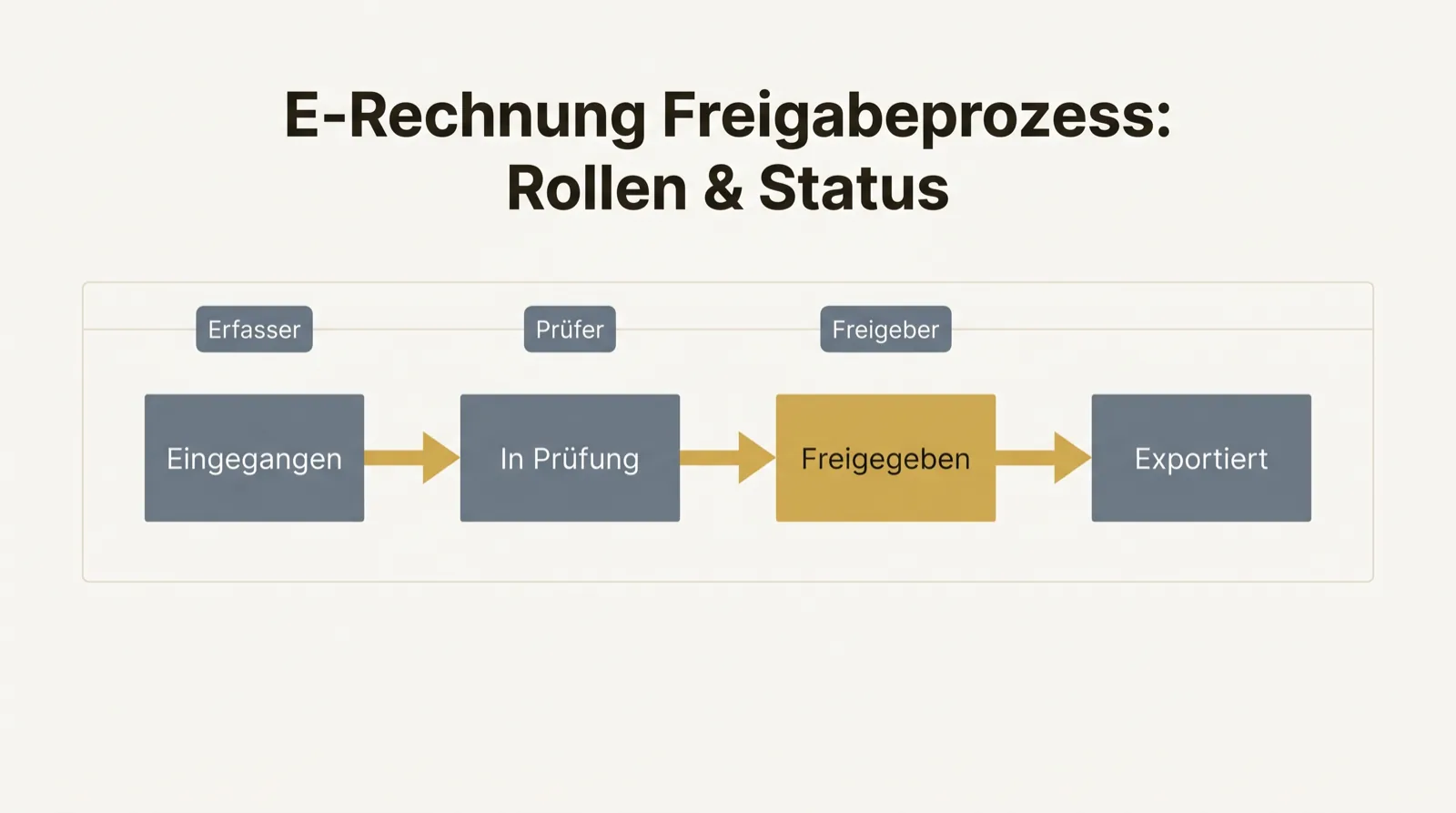
The trick is to think in roles, not in names. There are typically three: who captures or accepts the invoice, who checks it factually and arithmetically, who finally approves it.
In small businesses one person can carry several roles — what matters is that the role is named and has a deputy. If someone is out, the process is not out.
Status makes progress visible
Every invoice has exactly one status at any time: received, in review, approved, exported. No “lying somewhere”, no “surely someone is doing it”.
This visible state is gold: you immediately see what is stuck, what is ready to close and where an approval is missing — without asking.
Control without distrust
A good approval process is not a declaration of distrust. It protects those involved: whoever approves can show that and what was checked. In case of doubt that is also personal backing, not just control.
Four-eyes principle for larger amounts, clear value limits, documented approval — that seems strict but takes pressure off in everyday work because nothing stays hanging on individuals.
Building it in practice
Start pragmatically:
- Name three roles: capture, check, approve (with a deputy).
- Define four statuses: received, in review, approved, exported.
- Define a value limit for four-eyes approval.
- Log every approval traceably.
- No export without status “approved”.