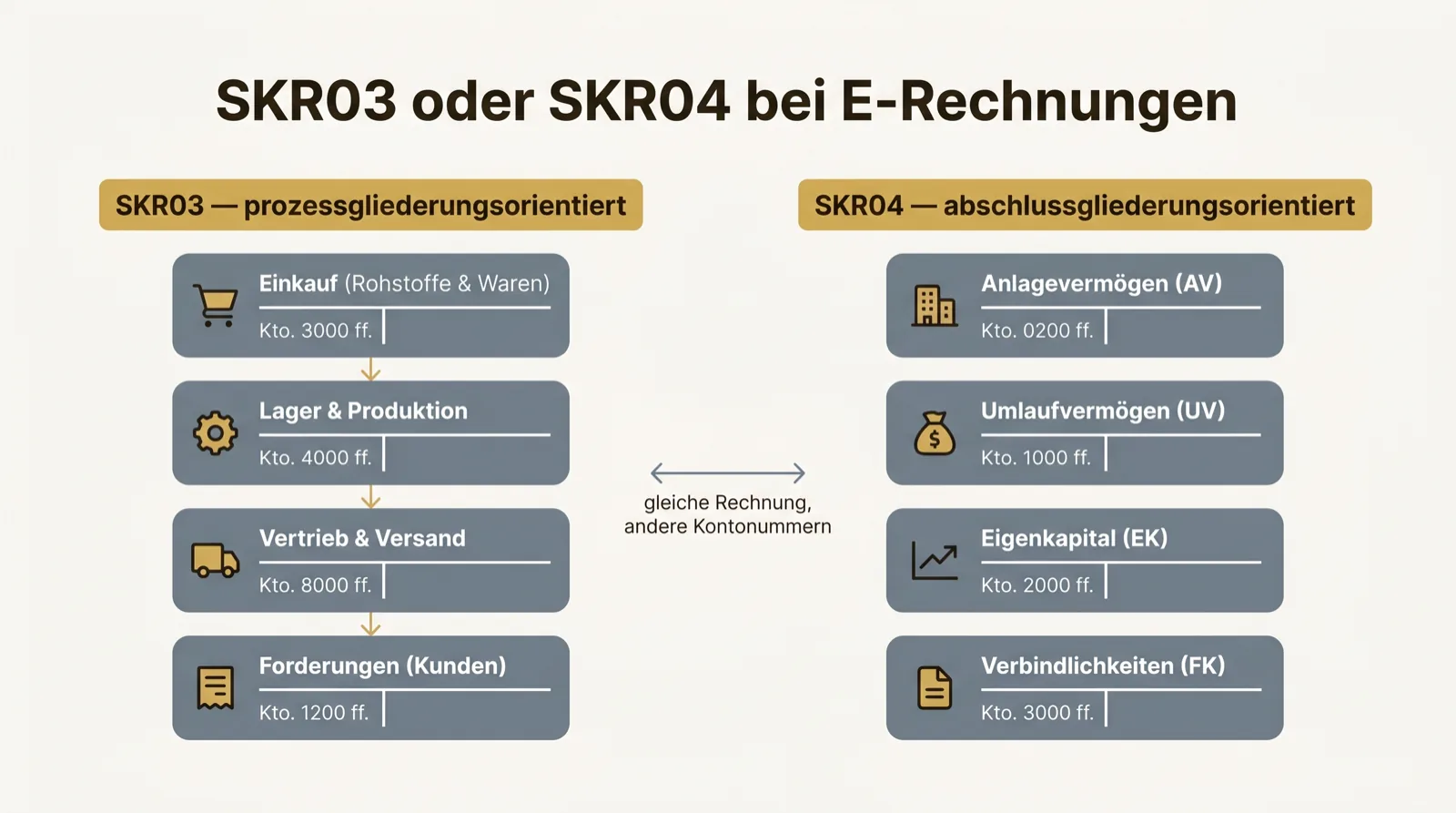
SKR03 and SKR04 are two maps of the same terrain
SKR03 is process-structure oriented, SKR04 close-structure oriented. Sounds academic, means in practice: same invoice, different account numbers. Which chart of accounts applies is usually set by the firm.
What matters is not which is “better” but that your intake consistently assigns accounts in the chart the firm works with.
DATEV handover · For tax advisors
The e-invoice does not assign accounts itself
A widespread fallacy: because the XRechnung is structured, it “knows” the account. It does not. The format carries invoice data, not company-specific account-assignment logic.
Account, tax key and assignment stay your decision. The structured data make the preparation easier — they do not replace it.
Master data first, then automation
Clean account assignment does not start at posting but at the master data: maintained creditors, default accounts per supplier, correct VAT keys, clear rules for recurring services.
If that is maintained, a large part of the account assignment can arise automatically as a proposal. If it is not maintained, you automate inconsistency. Order beats tooling.
Consistency over the months
A common audit annoyance: the same supplier is posted to account A in January, account B in March. Sometimes this way, sometimes that — that stands out and costs explanation time.
Uniform account assignment over the months is not an end in itself. It is part of traceability and makes every close faster because nothing has to be reinterpreted.
Preparation before export
Before the DATEV export this look is worth it:
- Which chart of accounts applies — SKR03 or SKR04 (ask the firm)?
- Are creditors and default accounts per supplier maintained?
- Are the VAT keys correctly assigned?
- Are recurring services assigned uniformly?
- Does the account assignment match the previous months?