One norm, two languages
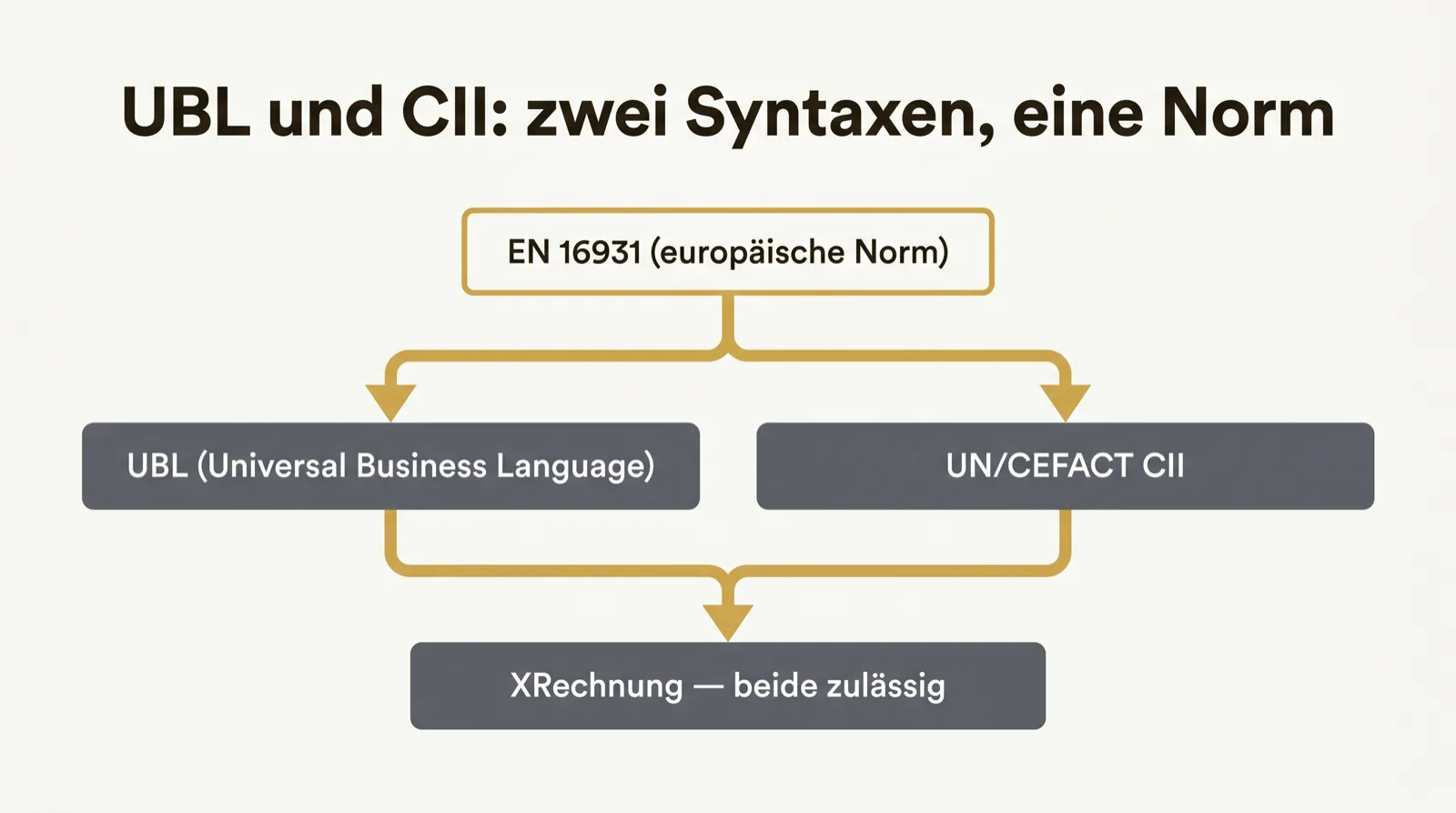
The XRechnung follows the European norm EN 16931. This norm defines which information an invoice must contain — but not just one technical way to express it.
There are two permitted syntaxes: UBL and UN/CEFACT CII. Picture the norm as the content and UBL or CII as two languages in which you can write down the same content.
Validate an XRechnung · Check an e-invoice for free
What distinguishes UBL and CII
UBL — Universal Business Language — is a widely used syntax, common in the international and Peppol environment. CII — Cross Industry Invoice by UN/CEFACT — is the syntax used, among others, by ZUGFeRD.
In content both carry the same mandatory details. The difference lies in the technical packaging, not in what your invoice says.
Why you as a recipient may stay relaxed
Here is the reassuring truth: which syntax arrives is determined by the sender, not by you. Your job is only that your processing understands both.
A decent solution detects UBL and CII automatically and turns both into the same readable invoice picture. You do not have to tell the abbreviations apart — your system has to be able to.
When the difference does matter
It becomes relevant mainly if you generate e-invoices yourself or connect systems. Then it must be clear which syntax is expected — for example because a Peppol route usually transports UBL while ZUGFeRD uses CII.
For pure receiving in everyday B2B it stays the same: interesting to know, but no cause for worry as long as your intake handles both variants.