The actual problem is not the format
Formats are technically solved. What costs firms time is the inconsistency: 40 clients, 40 ways of collecting and handing over invoices. Sometimes complete, sometimes as a photo, sometimes three weeks late.
The reform forces structuring anyway. That is the opportunity not just to adjust client processes but to finally unify them.
Standardization beats heroics
Many firms catch up the backlog individually every month — chasing documents by phone, sorting mailboxes, reconstructing assignments. That is expensive and does not scale.
The lever is not chasing faster. The lever is a uniform intake per client: fixed address, automatic validation, clear approval, clean export. Then what would otherwise have to be reconstructed arrives structured.
What belongs in a good hand-over package
A month-end close becomes fast when the client's package is complete. Not “the invoices” but a defined bundle:
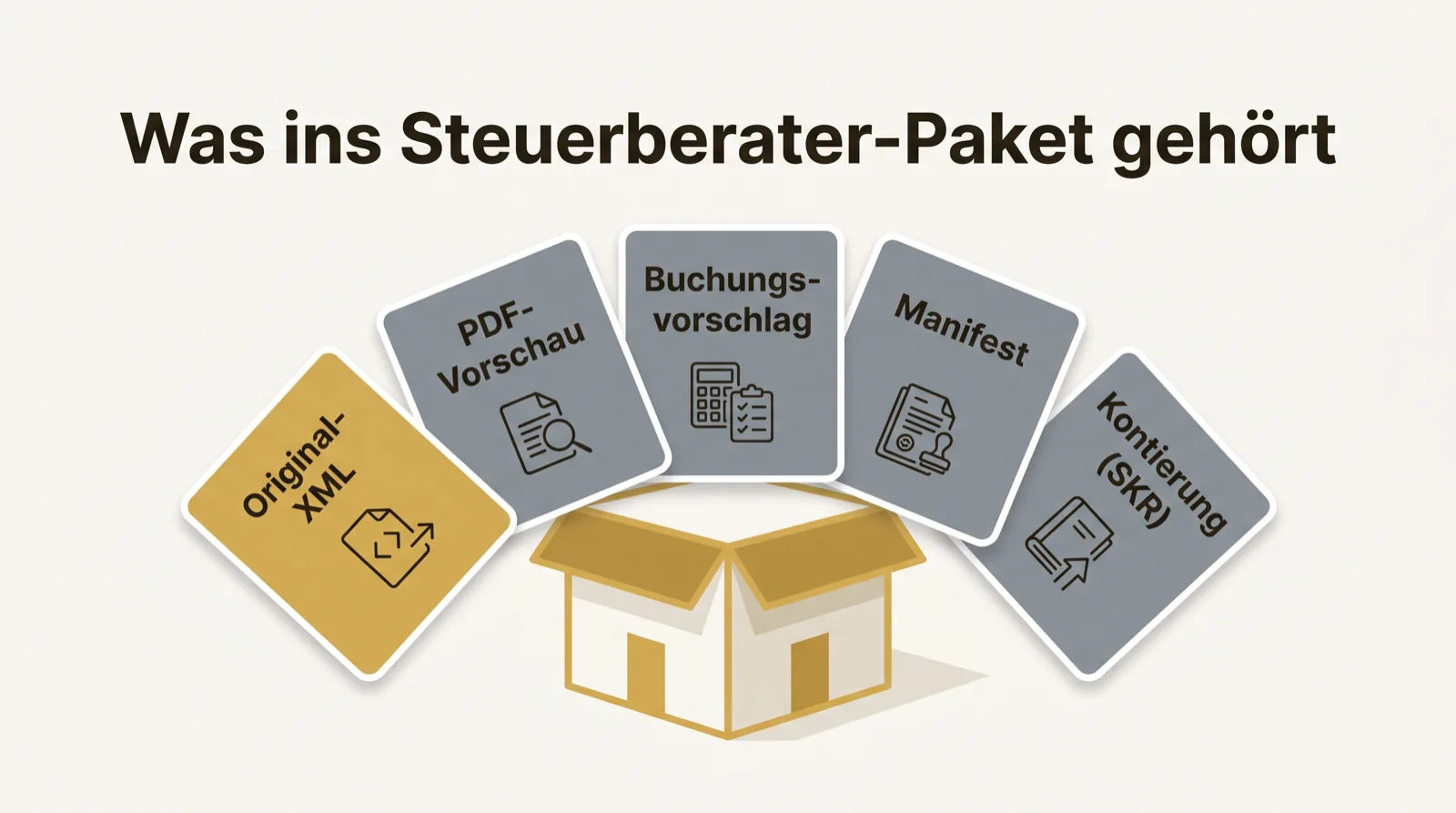
- The original in structured format (XRechnung XML or ZUGFeRD PDF with XML).
- A readable preview per document.
- A posting proposal with account and VAT key.
- Account-assignment information matching the chart of accounts (SKR03/SKR04).
- A manifest: what is included, how many documents, which period.
Fewer queries means more margin
Every query — “isn't an invoice missing?”, “which account?”, “where is the original?” — costs both sides time and nerves. In firm everyday life this adds up to days per month.
A standardized intake turns this around: what arrives structured and complete does not have to be asked for. The time gained is not efficiency for its own sake — it is margin.
The firm sets the pace
The most effective step is a clear announcement to the clients: this is how invoice intake works from now on. One address, one route, one format handling, one hand-over format.
Clients usually follow a clear standard willingly — it also takes work off them. It only gets difficult if everyone is allowed to keep their own way. Standard does not mean bureaucracy, it means predictability.