What an API is even for
An API is nothing other than a defined door between two systems: one program hands another data and commands without a human clicking in between.
In the invoice context that means: intake, validation, status query and export run system-controlled. Not “someone exports” but “it is exported”.
Receive e-invoices · Check an e-invoice for free
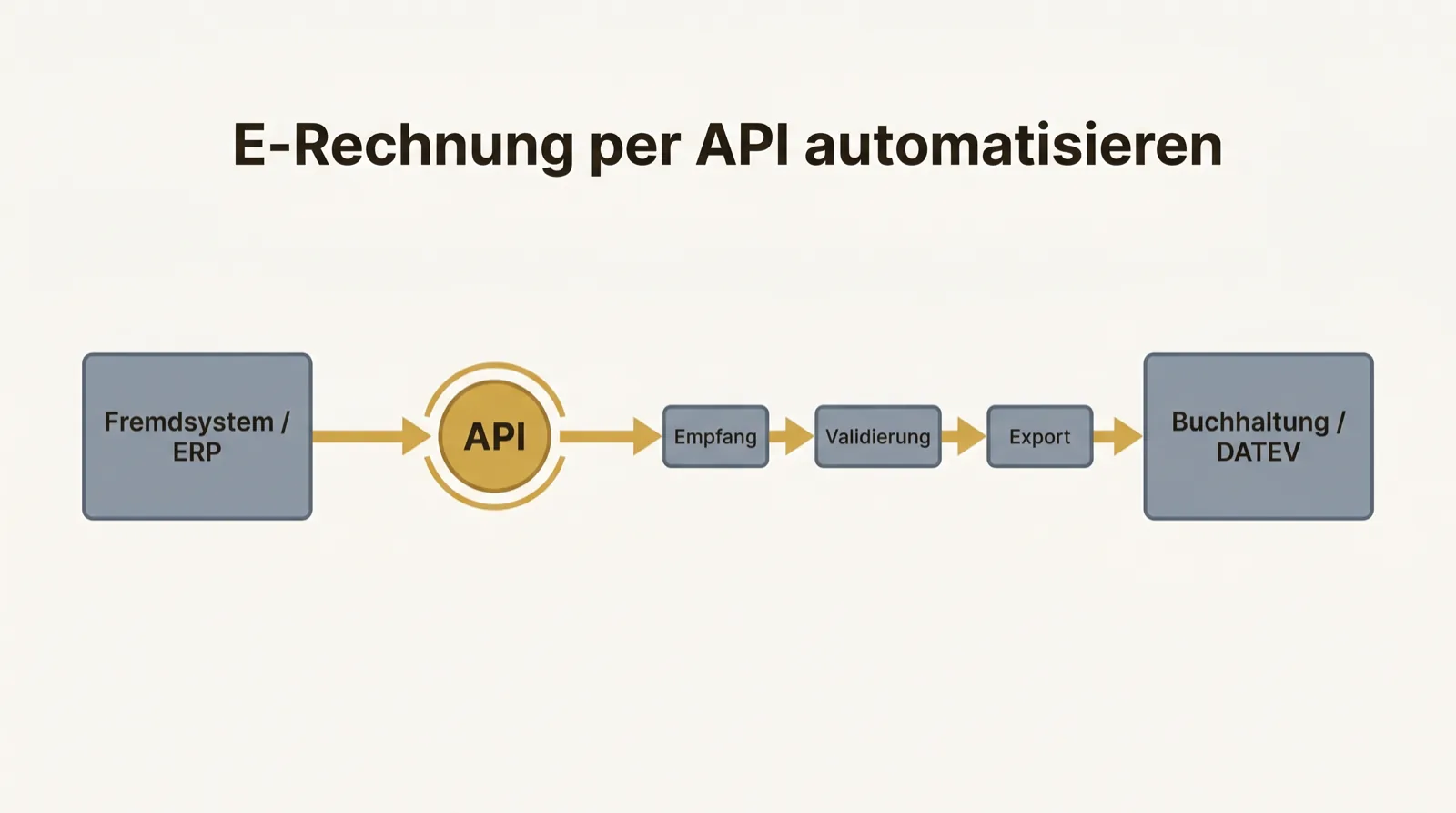
When it is worth it — and when not
Honestly: for twenty invoices a month an API is a sledgehammer to crack a nut. The effort of the connection exceeds the benefit.
It gets interesting with volume, repetition and existing systems: many invoices, an ERP or industry software, an integrator connecting several clients. Then the interface saves real, recurring work.
Typical scenarios
Three patterns keep appearing. First the larger team with high document volume that can no longer scale the manual step. Second the software provider or integrator embedding invoice intake into its product. Third the firm that wants to connect many clients in a standardized way.
What they have in common: the API replaces not the thinking but the repetition.
What an API does not solve
An interface automates the route, not the correctness. If the rules for check, account assignment and approval are not cleanly defined, the API automates the disorder — only faster.
So here too: first the clean process, then automation. Putting an API on an unclear procedure accelerates the problem, not the solution.
Decision aid
When an API is sensible:
- High, recurring document volume instead of few single cases.
- An existing ERP/industry system to be connected.
- An integrator or firm with many similar connections.
- Clearly defined check, account-assignment and approval rules present.
- With little volume or an unclear process: first manual and clean, then API.